Appointment form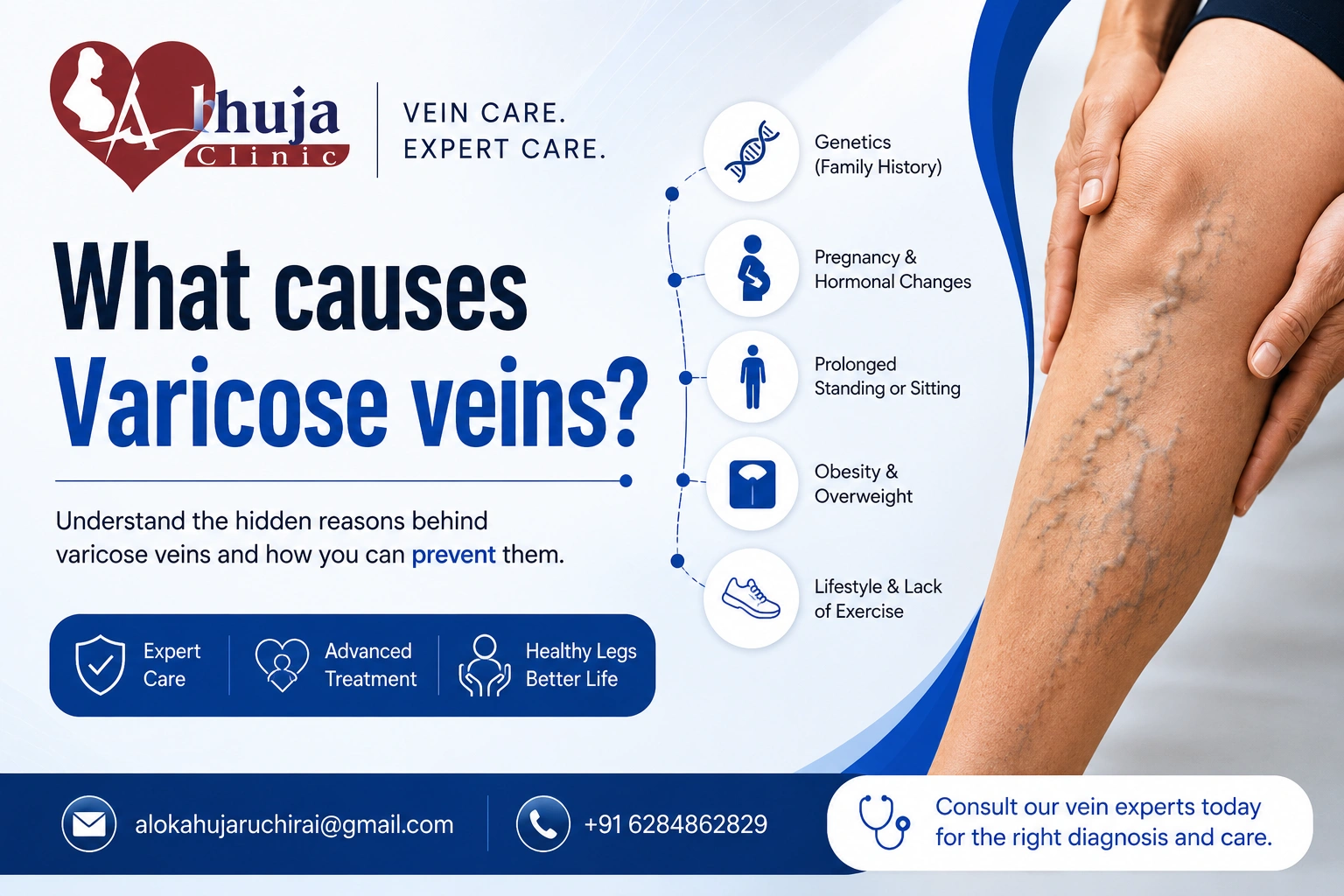
Varicose veins are a common vascular condition that can affect millions of people worldwide. These veins are enlarged, twisted, and often appear blue or purple on the legs and feet. These veins can sometimes cause discomfort, pain, swelling, and other complications if left untreated. The most common question people generally ask is “What causes Varicose veins?”
In this blog, you will get to know what varicose veins actually are, why they are caused, their symptoms, risk factors one should keep in mind, what prevents them, and when you should see a doctor. Varicose veins are not a life-threatening condition, but they can get complicated if ignored a proper treatment or checkup. One should visit a reputed healthcare centre like Dr. Ahuja Clinic, where Dr. Alok Ahuja, an experienced surgeon, provides proper diagnostics and treatment for varicose veins.
The Varicose Veins are swollen and enlarged blood vessels that bulge under the surface of the skin. These veins commonly appear on the feet, ankles, and legs in a blue or purple colour. Having Varicose Veins can be painful and itchy. These veins may not be dangerous for many people, but in some severe cases, they may cause some serious health concerns, such as forming a blood clot.
Normally, the arteries carry blood from the heart to the rest of the body, and the veins return the blood of the rest of the body to the heart. But when we talk about the legs, the veins must work against gravity and provide blood to the heart. The tiny valves in the veins open and close as the blood flows towards the heart, but when these valves weaken or get damaged, the blood can flow backward, which can result in varicose veins. This condition is caused when the blood flows backward and collects in the veins, causing them to enlarge and become visible.
Here are some symptoms one may experience if having varicose veins:-
Varicose veins and spider veins are not the same. Varicose Veinsare large, twisted, and bulging veins, while spider veins are thin, web-like lines. Spider Veins are smaller and flat against the skin, and varicose veins are larger and raised above the skin. Spider veins can be caused by certain factors like genetics, sun exposure, hormonal changes, pregnancy, and prolonged standing.
Can you have Both?
Yes, one can have both varicose veins and spider veins. Many people with varicose veins may also develop spider veins.
Though the primary cause of varicose veins is the weakened valves that do not function properly, there are some other factors too that can increase the chances of getting varicose veins. Go through them one by one for detailed information:-
When a person ages, the veins naturally lose their elasticity over time. Though varicose veins can develop at any age, but it is most likely to occur after the age of 40.
This is one of the common causes for a woman to have varicose veins. Factors like high blood volume during pregnancy and increased pressure from the uterus on the pelvic veins can slow the blood flow and increase the pressure in the leg veins. Due to these changes during pregnancy, varicose veins are more likely to occur.
When there is a change in the hormonal levels in the body, this relaxes the wall of the veins and makes it easier for the veins to stretch and the valve to weaken.
When the body remains at the same position for a prolonged period of time, the blood pressure slows down, contributing to the increased pressure in the veins. Jobs that require long sitting or standing hours, such as office employees, nurses, etc can significantly affect the blood circulation.
When a body carries excessive weight, the most strain goes on to the legs because they carry the whole body’s weight. This causes increased pressure in the legs and makes its harder for the blood to return to the heart.
Genetics plays an important role in health conditions. If one or both parents have varicose veins, then the chances of developing this condition significantly increase.
Lifestyle habits do not directly cause varicose veins, but they can increase the risk of developing them. Some of the habits are discussed below:-
Lack of Physical Activity
Having a sedentary lifestyle can reduce the efficiency of the blood circulation and can contribute to the pooling of blood in the legs. Regular movement can help the calf muscles to pump blood back towards the heart.
Wearing Tight Clothing
Wearing tight-fitted clothes can sometimes stop the blood circulation. Wearing tight clothes does not cause varicose veins, but it can restrict proper blood circulation. One should wear lose and comfortable clothes.
Smoking
Smoking can also be a cause, as it can damage blood vessels, which can affect the blood circulation.
The risk factors for this condition, like age and genetics, can’t be controlled, but certain lifestyle changes may help in a healthy circulation. Here are some changes one could opt for if want to reduce the chances of getting varicose veins:-
Staying Physically Active
A person should stay physically active because doing exercise daily improves the blood flow and strengthens the calf muscles, which helps the blood pump in the upward direction.
Maintain a Healthy Weight
When the body is overweight, it increases the pressure on the legs, resulting in decreased pressure on the veins. So a person needs to maintain a healthy body weight.
Avoid Sitting or Standing for Long Periods
If you have a long-hour sitting and standing job, take short breaks throughout the day which can improve blood circulation.
Elevate Your Legs
Raising the legs above heart level for short periods may help reduce pressure in the leg veins.
Wear Compression Stockings
Wearing compression stockings can provide a gentle pressure that can support healthy blood flow and may also reduce swelling.
Follow a Balanced Diet
Following a balanced diet, rich in fiber, fruits, vegetables, and adequate hydration, can support overall vascular health.
Taking early actions can help determine the best treatment and can prevent certain complications. If you experience any of these symptoms listed below, it’s better to get yourself checked to prevent any complications further.
General surgeon Dr. Alok Ahuja provides the best treatment for varicose veins in Chandigarh. He has over 22 years of experience in this medical field. He can easily handle surgical cases from general surgery, laparoscopic surgeries, to difficult cases like cancer of the breast, esophagus, small & large intestines, and those of the rectum and anal canal. He has worked in various reputed hospitals in the tricity, and currently, he is a senior consultant and the director of Ahuja Clinic in Sector-18, Chandigarh. This clinic has access to in-house testing labs and modern technologies, which makes it a prominent option to opt for. Contact our team here if you’re concerned or confused about your symptoms for varicose veins, and we will help you out in every possible step needed.
Do varicose veins return after treatment?
Though the treatment is effective, it may come back in some cases, such as if a person becomes pregnant after the treatment or if they’re obese or follow a sedentary lifestyle.
Can the varicose veins go away on their own?
Generally, these veins develop when you’re pregnant and may go away on their own within 2-3 weeks after delivering the baby. But, in some cases, it might not go away on its own and require medical attention.
Can varicose veins occur in only one leg?
Yes, this could be a possible situation. The varicose veins can occur in just one leg due to reasons like previous injury, asymmetrical pressure, or Deep Vein Thrombosis (DVT).
Are varicose veins dangerous?
Generally, these veins aren’t dangerous, but there are some concerns one should keep in mind to prevent the risks, such as maintaining a healthy body weight by doing regular exercise and avoiding sitting or standing for long hours.
Copyright © 2026 Dr Ahuja Clinic. All Rights Reserved | Marketing by : WebHopers
Website Design by CSW Technologies
 +91 6284862829
  Skin Geniee