Appointment form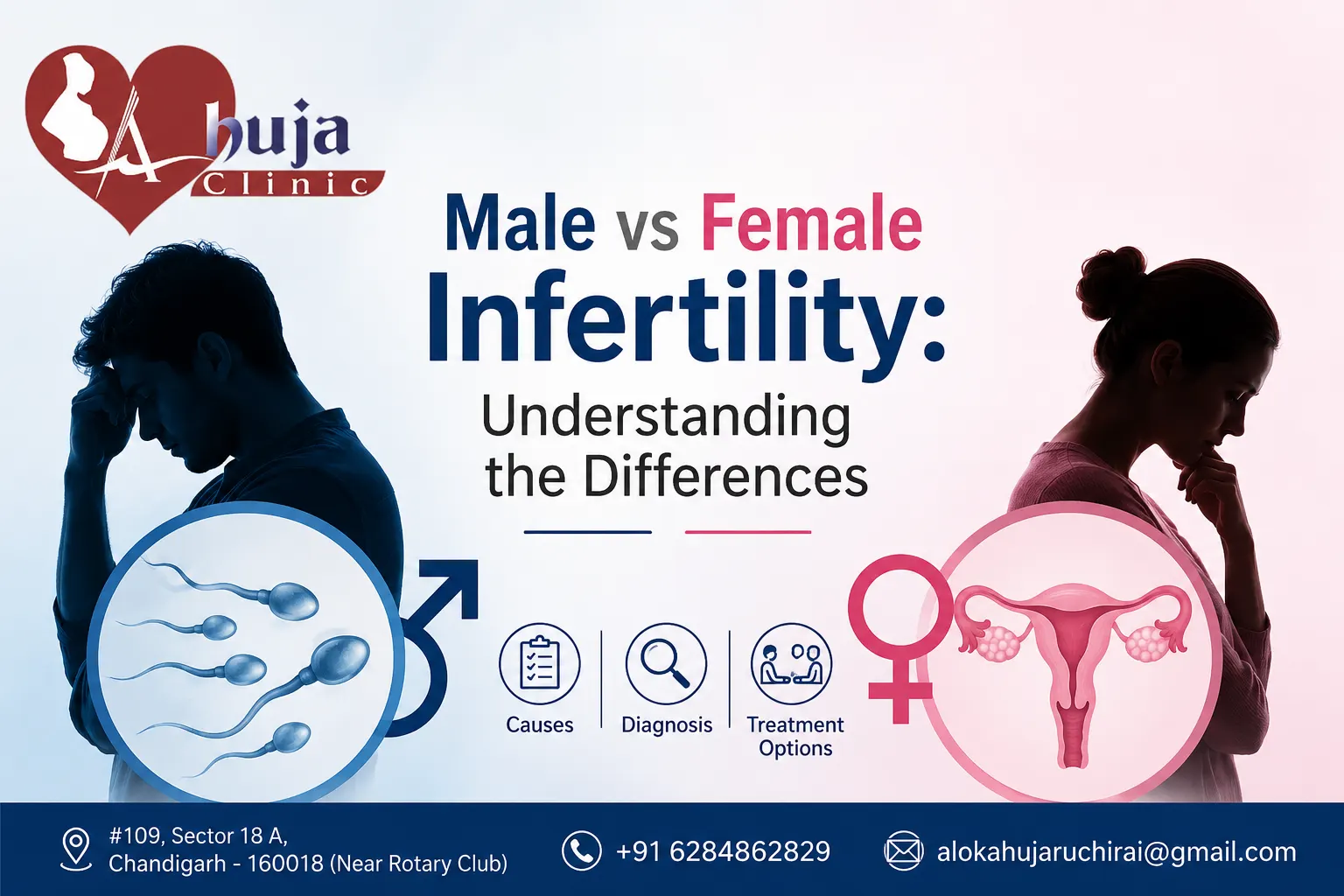
Infertility is often misunderstood, and so many people believe it is primarily a woman’s concern. In reality, male vs female infertility is a shared reproductive health issue that can affect the partner or both. According to the World Health Organization (WHO), infertility affects around 1 in 6 people globally. In this blog, we will discuss male vs female infertility and understand the differences.
Understanding the difference between male and female infertility is the first step toward finding the right diagnosis and treatment. At Dr. Ahuja Clinic, Chandigarh, we believe that early evaluation and personalized care can significantly improve the chances of a successful pregnancy. If the issue lies with the male partner, the female partner, or both, then timely consultation with a fertility specialist can make all the difference.
Infertility is defined as the inability to conceive after 12 months of regular, unprotected intercourse for the couples where the woman is under 35 years of age or after 6 months if she is 35 or older.
Infertility is generally described in two ways like primar infertility, where a couple has never conceived. Secondary infertility is when a couple faces difficulty conceiving again after having had one or more previous pregnancies.
Contrary to the common belief, infertility is not limited to women. Medical studies show that approximately one-third of infertility cases are related to male factors. One third to female factors, and the remaining cases involve both partners or unexplained infertility.
One of the big myths is the surrounding infertility is that it is mainly caused by women, but the truth is quite different.
Male vs Female Infertility
| Factor | Male infertility | Female infertility |
| Primary Cause | Problems with sperm | Problems with ovulation or reproductive organs |
| Common Symptoms | Low libido, ejaculation issues, hormonal imbalance | Irregular periods, painful menstruation, ovulation disorders |
| Diagnosis | Semen analysis, hormone tests | Ultrasound, hormone tests, AMH, HSG |
| Treatment | Medicines, surgery, lifestyle changes, ICSI | Medicines, ovulation induction, IVF, surgery |
| Prevention | Healthy lifestyle and early treatment | Healthy lifestyle and timely reproductive care |
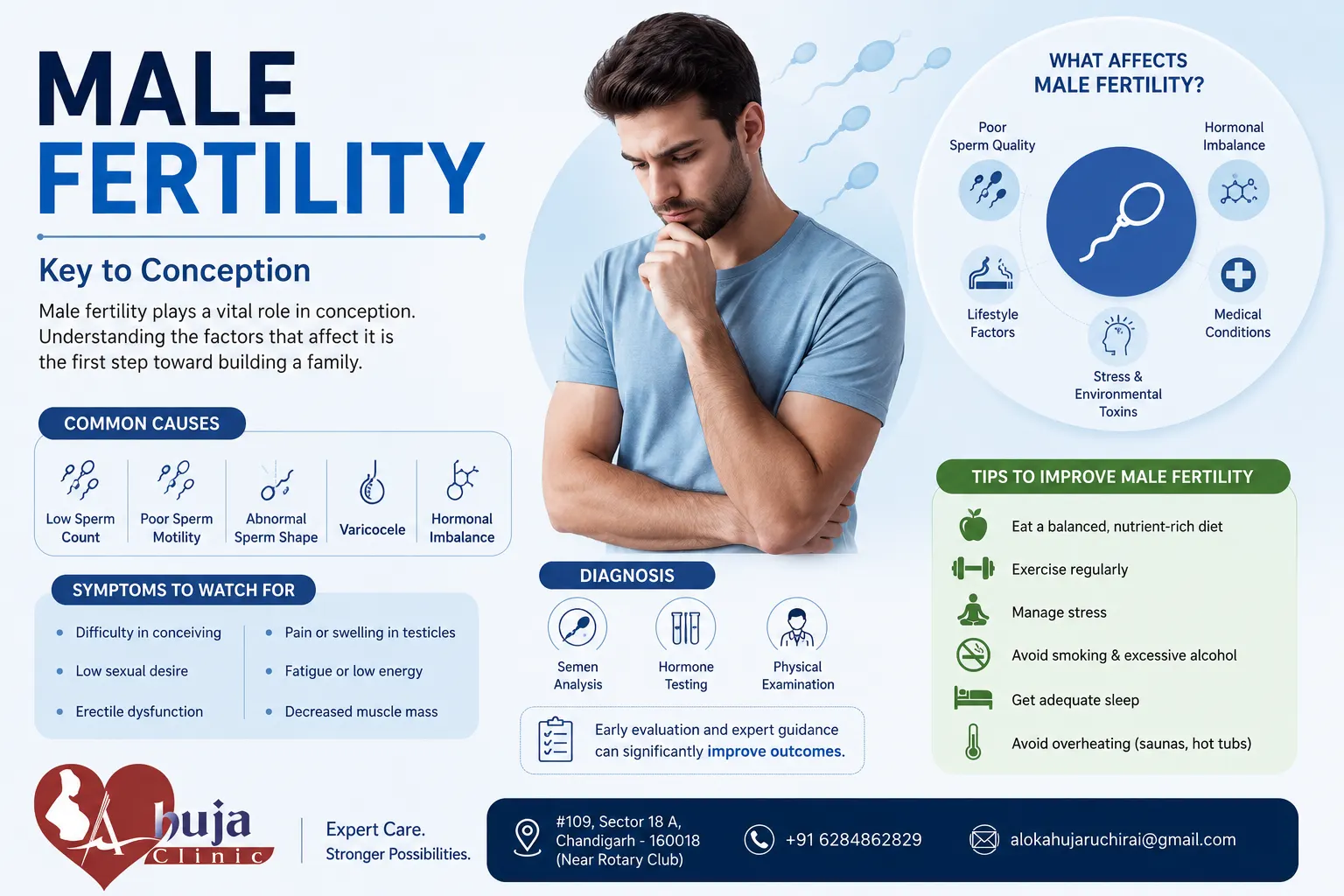
Male infertility is usually related to the production, function, or delivery of the sperm.
Low sperm count: A low than normal sperm count can reduce the likelihood of fertilizing an egg naturally
Poor Sperm Motility: Healthy sperm need to swim efficiently to reach and fertilize the egg. Low sperm mobility can reduce the movement of the sperm.
Abnormal Shape: Sperm that are shaped a little wrong might have trouble pushing through the egg, and that can lower the chances for fertility.
Hormonal disorders: When testosterone is low, or when hormone signals are off, sperm production can get interrupted, and reproductive health overall can take a hit.
Lifestyle factors: Daily routines are really important for sperm. Things like smoking, drinking too much, being obese, chronic stress, not moving much, eating poorly, frequent heat exposure, and even certain medicines can all worsen sperm quality over time.
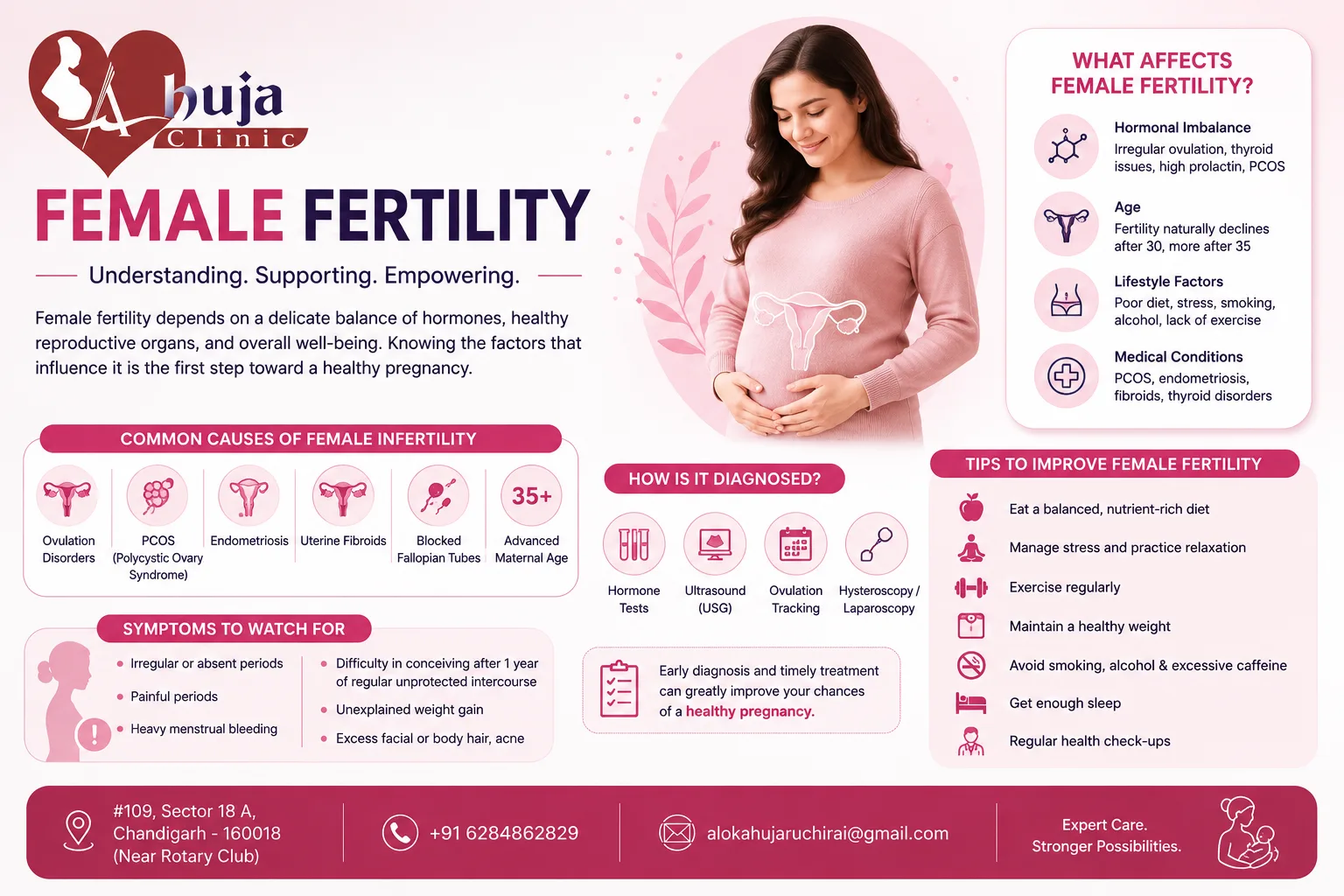
Female infertility can show up when ovulation does not work right, or when the uterus or fallopian tubes end up involved in some kind of problem.
PCOS: PCOS is one of the main reasons for infertility. It causes irregular ovulation, like eggs do not come out steadily.
Ovulation Disorders: When hormones get out of sync, your body can not release a healthy egg. In other words, egg release can get delayed or just fail, which makes conception hard.
Endometriosis: Endometriosis is when tissue like the uterine lining starts growing outside the uterus. That misplaced tissue can irritate the area, and it tends to affect fertility.
Blocked Fallopian Tubes: If the tubes are blocked or damaged, then your egg and sperm can not meet naturally. Scar tissue and infections are sometimes behind this kind of blockage.
Uterine Fibroids: Uterine fibroids, especially larger ones, can mess with implantation, and they can also make pregnancy more complicated.
Age-Related Fertility Decline: Female fertility declines over time, and it starts after about 30. It usually drops faster after 35. This is mainly due to fewer eggs and less egg quality as the years go on.
There are quite a few things that can lower fertility for both men and women, and some are pretty common. Things like age, cigarette smoking, alcohol use, obesity, not getting good nutrition, diabetes, thyroid disorders, stress, not sleeping enough, and being around environmental toxins can ruin your fertility health. If you start improving habits, your reproductive health can feel more supported, and treatment outcomes often get better for either partner, depending on the situation.
Getting the diagnosis right is really the starting point for any fertility treatment. It is important to understand the root cause of any problem. So that your doctors can understand and suggest you a right treatment option. For more information, you can book a consultation with Dr. Ruchi Rai Ahuja at Dr. Ahuja Clinic. She is the best gynaecologist in Chandigarh and has years of experience in infertility treatment.
Male Fertility Tests
For men, a fertility specialist might suggest a semen analysis. They may also request a hormone profile, a scrotal ultrasound, and sometimes genetic testing, but only when it seems necessary. Overall, the full assessment helps pinpoint the cause, and then doctors can suggest the most suitable treatment plan.
Female Fertility Tests
For women, the evaluation usually covers ovulation testing, a hormonal evaluation, a pelvic ultrasound, an AMH test (Anti-Müllerian Hormone), an HSG test (Hysterosalpingography), and in some cases a diagnostic laparoscopy if your doctor needs a closer look.
You should reach out for professional advice if you have been trying to conceive for one year, or if it is six months and the woman is over 35. Also, consider getting help if periods are irregular or completely missing, or if there is a history of recurrent miscarriages.
It can also be smart to seek advice if either partner already has a known reproductive condition, or if there are concerns about sperm quality or sexual function. And if previous pelvic surgery or past infections might have changed fertility chances, then you should not wait for too long.
A lot of fertility issues can actually be managed pretty well if they are diagnosed properly at an early stage. When people get evaluated quickly, there is usually a stronger chance for natural conception, and treatments can be planned more precisely. As a Best Gynecologist in Chandigarh, Dr. Ruchi Rai Ahuja understands that infertility can be emotionally difficult. The outcome improves when proper reproductive techniques are used. Visit the infertility clinic to improve your fertility.
Choosing a fertility clinic is one of those decisions that really matters. Dr. Ahuja Clinic is the best Gynae Clinic in Chandigarh where couples get proper support to understand the real problem. We do a proper, detailed check for both partners and provide customized fertility plans to improve the chance of conceiving. Additionally, we use modern diagnostic tools to focus on male and female infertility. We also provide patient-centered counselling and ethical recommendations that stay clear about the process.
We know that every path to parenthood looks a little different. So our team stays focused on helping couples take thoughtful, informed steps toward becoming parents.









Copyright © 2026 Dr Ahuja Clinic. All Rights Reserved | Marketing by : WebHopers
Website Design by CSW Technologies

 +91 6284862829
  Skin Geniee