Appointment form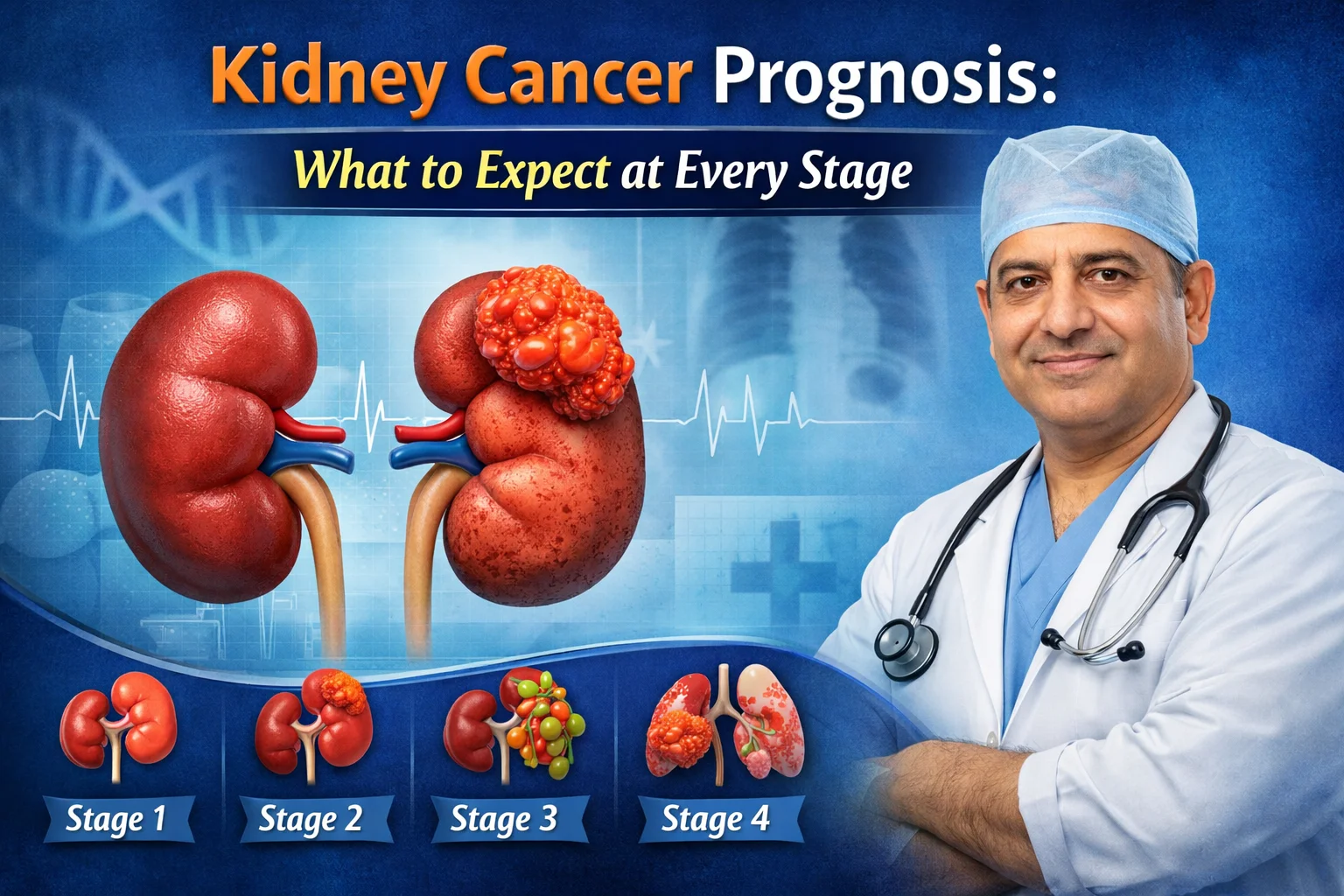
Kidney cancer is a serious condition that can cause certain changes in your body as well as your life. The good news is that this cancer is manageable if detected early and treated with the right approach. According to the report submitted by the Global Cancer Observatory, it has been seen that India has witnessed around 17,000 cases in one year, and the number has continued to increase. But thankfully, the advancements in diagnosis and treatment have contributed to improved outcomes.
While learning about kidney cancer, the important aspect that patients and their families should understand is the prognosis. It means what is th recovery period, survival rate, and quality of life. In addition, there is another crucial thing to note, which is that kidney prognosis is not the same for everyone. It can vary from person to person depending on the stage, overall health, and treatment chosen.
Therefore, Dr Alok Ahuja, a reputable kidney cancer surgeon in Tricity, has compiled all the information required to help you understand this condition. In this blog, we will break down the kidney cancer prognosis at every stage, possible treatment options, and which one can make a huge difference.
Kidneys are the two bean-shaped organs whose role is to filter out waste from the blood and eliminate it from the body by producing urine. When the level of abnormal cells increases uncontrollably in the tissues of the kidney, it generally gives rise to a tumour. This condition is known as kidney cancer.
Several studies have shown that the most common type is Renal Cell Carcinoma. It gets started in the tiny filtering units, known as tubules. This condition is generally noted in one kidney; however, in rare cases, it might appear in both kidneys. This condition is associated with unnoticeable symptoms, which makes it more concerning. Moreover, as this tumour grows, it can also interfere with the overall functioning of the kidney and can sometimes also affect other parts of the body if not detected and treated on time.
Understanding Kidney Cancer Development
Genetic mutations are considered an underlying cause of kidney cancer. These variations lead to an increase in the level of cells, which further get divided, thereby disturbing the overall cycle of the body. When these cells continue to grow, they accumulate, forming a tumour. Some of the factors that are responsible for causing this condition can be:
Experts thus strictly advise undergoing regular blood tests and blood pressure monitoring to keep a proper check on overall health. In addition, you can go for an ultrasound or a CT scan if suggested by the doctor. These tests can be necessary, especially when you witness some of the symptoms, such as blood in the urine, anaemia, fatigue, weight loss, or continuous pain in the lower back.
Whenever a person gets diagnosed with any disease, especially cancer like kidney cancer, some questions that first come to their mind are
Well, in medical terms, all these questions are known as prognosis. It can help the doctors detect at which stage the patient is and how well their body will respond to the different treatment options available.
If we talk about kidney cancer, especially Renal Cell Carcinoma, the prognosis associated with it is favourable if detected early. Here comes an important part that you should understand: the kidney cancer prognosis should not be considered as fixed outcomes. There are certain factors that can affect the prognosis, which will be discussed in the next section.
So, as pointed earlier, the overall outcomes are not fixed and the same for all individuals. In this, we will discuss the key points that can also support doctors in planning a tailored treatment approach:
At trusted surgery care centres, like Dr Ahuja Clinic, all these aspects are carefully evaluated to design personalised care treatment for the patients.
While diagnosing the kidney cancer, staging plays a critical role in knowing how far it has spread. In addition, it also aids in deciding the right treatment option. In other words, it can also be said that this helps the doctors to analyse whether the cancer is confined to the kidney or has affected other parts of the body.
Kidney cancer is classified into four stages, followed by the TNM system. In this, “T” stands for tumour to know the size, “N” stands for Lymph Nodes to understand whether it has spread to lymph nodes or not, and “M” stands for Metastasis, which tells whether the cancer has affected distant organs.
Stage 1 – At this stage, the tumour is small and limited entirely within the kidney. This can be a sign of relief that it has not spread to lymph nodes or other organs. It is generally an early stage where treatment outcomes are usually very favourable.
Stage 2 – In this stage, the size of the tumour is comparatively larger in relation to Stage 1. But it is still limited to the kidney and does not affect other parts of the body. The treatment success rates remain high.
Stage 3 – In this stage, the cancer may have spread to other body parts. It includes nearby lymph nodes, blood vessels, or surrounding tissues. It is considered a locally advanced stage and thus needs effective management followed by a combination of treatments.
Stage 4 – This is the most advanced stage, where the cancer has spread to distant organs such as the lungs, bones, or liver. In this stage, the treatment options focus on controlling the disease, improving quality of life, and extending the survival rate.
Till now, you might be aware that if the kidney cancer is detected early, then the treatment options available can offer comparatively better outcomes. Here, you will learn the kidney cancer prognosis associated with each stage:
Stage 1
The cancer is small and only in the kidney. Thus, the treatment can work very well, and recovery chances are high.
What to Expect?
Stage 2
The cancer is bigger, but still inside the kidney. So, with proper treatment, outcomes can still be positive.
What to Expect?
Stage 3
In this, cancer has started to spread across nearby organs, making the treatment comparatively more complex. However, with the right treatment and a trusted surgeon, the treatment can still be managed effectively.
What to Expect?
Stage 4
In this stage, Kidney Cancer has spread to other parts of the body. In this stage, the treatment is designed to put a control on spreading the disease further in the body.
What to Expect?
Technological advancements and innovation in science have shifted the way kidney cancer is treated in comparison to the early days. Today, these treatments offer improved results, contributing to improving the quality of life. As per your condition and stage, the recommended treatment options can be different, such as one or a combination of treatments.
The following are some of the modern approaches that are commonly used:
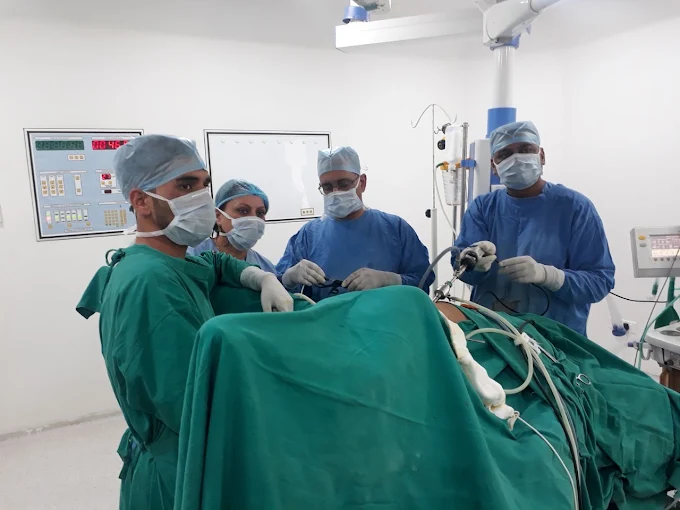
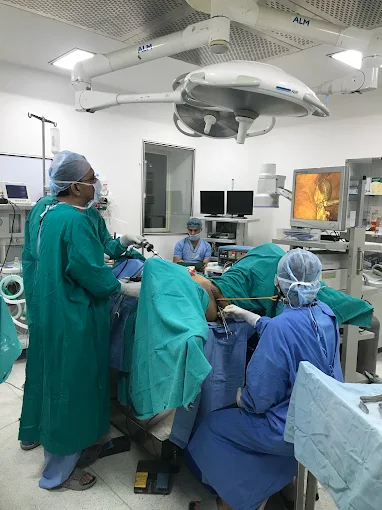
Surgery (Nephrectomy) – This is the most common and effective treatment, especially in early stages. It involves removing part or all of the affected kidney to eliminate the tumour.
So, with the right treatment followed by expert care from leading kidney cancer surgeons like Dr Alok Ahuja, one can experience improved survival rates.
To treat the kidney cancer, it is vital to undergo the right treatment, which will be decided if you choose a reliable treatment centre. This will also play a crucial role in improving the kidney cancer prognosis. At Dr Ahuja Clinic, we focus on providing personalised and patient-centric approaches backed by advanced medical treatments.
Our clinic is led by Dr Alok Ahuja, who has a prominent position as a trusted Urologist in Chandigarh for kidney cancer. Under their expertise, you can get:
Accurate diagnosis
Thus, with a wealth of experience, Dr Ahuja Clinic will be with you at every stage, helping you cope with the situation smoothly.
The overall cost of this condition can vary depending on the stage, treatment chosen, selected clinic, and the experience of the surgeon chosen. In comparison to metro cities, in Tricity, you can access affordable treatment options for kidney cancer.
Here is an approximate breakdown of the cost depending on the stages:
Disclaimer – The above-mentioned costs are just a rough idea, which may vary based on the individual’s condition and type of treatment. So, for an accurate estimate, kindly book a consultation with Dr Ahuja Clinic.
Though Kidney Cancer can be treated medically, some steps can help safeguard and improve the overall well-being.
As stated earlier, that the kidney cancer is associated with some unnoticeable symptoms, but certain signs should not be ignored at any cost. The following are those symptoms,
Note that early detection can lead to better treatment outcomes. Therefore, if any of them persist, visit Dr Ahuja Clinic, the best centre for kidney cancer treatment in Chandigarh.
Address: #109 Sector 18 A, Chandigarh PIN 160018 (near Rotary Club)
Email: alokahujaruchirai@gmail.com
Mobile Number: +91-6284862829










Copyright © 2026 Dr Ahuja Clinic. All Rights Reserved | Marketing by : WebHopers
Website Design by CSW Technologies

 +91 6284862829
  Skin Geniee