Appointment form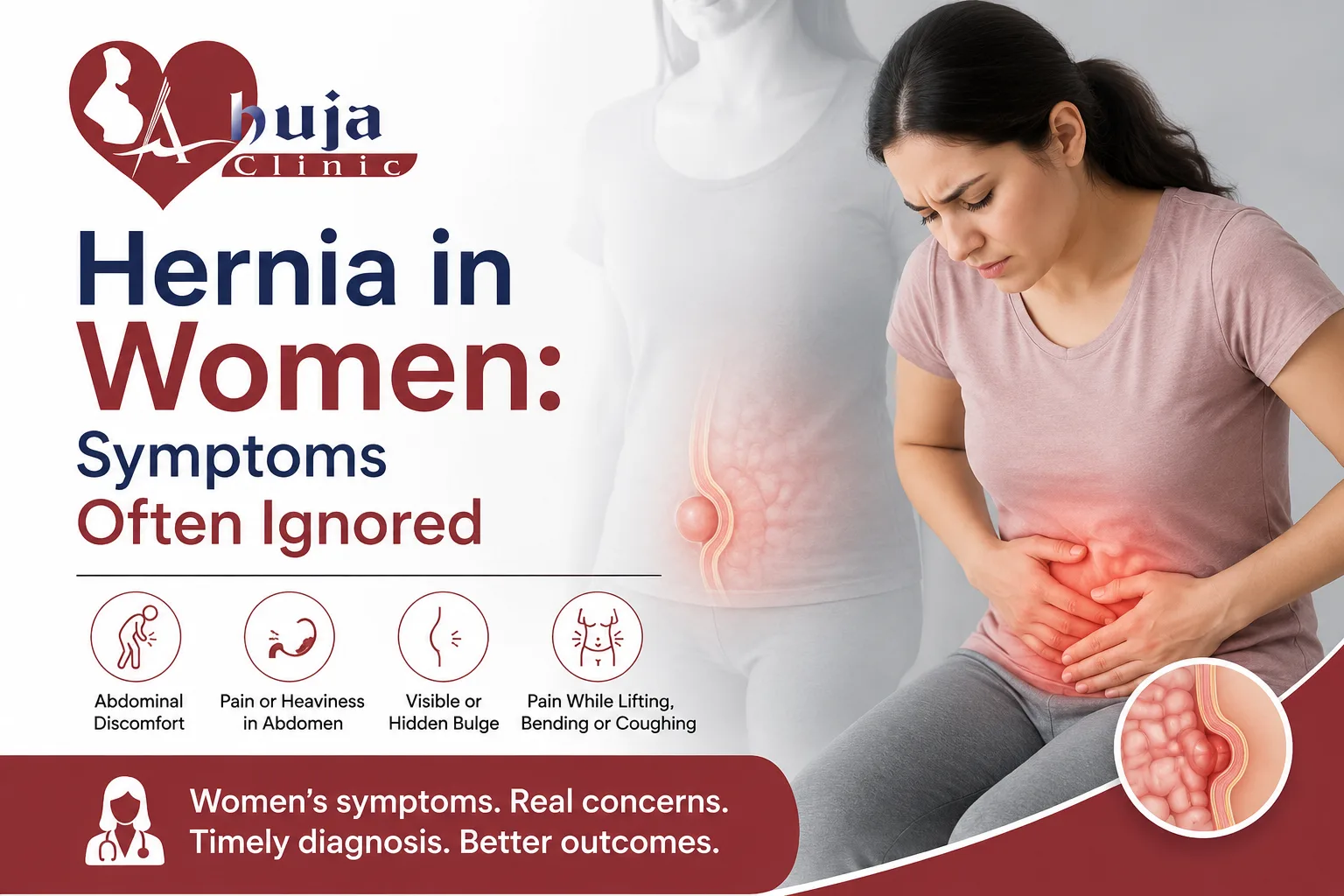
These days, hernia has become a common health problem. Most people think it only affects men. But the truth is, hernia in women is common, and symptoms are often ignored. In fact, many women in India are living with a hernia without even knowing it. This is because the symptoms in women are different. Because of this, hernia in women is frequently ignored or misdiagnosed as some other disease.
Women often dismiss their pain. They think it is period pain, muscle strain, or a gynaecological issue. By the time they visit a doctor for a hernia specifically, months or even years have passed. In this blog, we will explain what a hernia is and when you should see a doctor. A hernia does not always visible lump in women. The symptoms can be as simple as a dull ache or a pulling sensation in the lower abdomen.
A hernia happens when an internal organ or tissue pushes through a weak spot in the surrounding muscle. Imagine a small hole in the fabric underneath starts poking out. That is exactly what happens inside the body during a hernia.
This weak spot is usually in the abdominal wall or groin area. Hernias do not go away on their own. They usually grow big over time. And if left untreated, they can become a medical emergency.
In women, this hernia sits deep in the groin area. It does not always form a visible. But, women feel a nagging pain in the groin or inner thigh. This pain often gets worse during walking, exercising, or standing for long periods. Because of this, it is easily confused with ovarian cysts or a pulled muscle.
Femoral hernia is more common in women than in men. This is because women have a wide pelvis. This hernia appears just below the groin crease. It is usually small in size and it is mistaken for a swollen lymph node. What makes a femoral hernia dangerous is that it has a high risk of getting trapped. This is called strangulation, and it requires emergency surgery.
Pregnancy puts a lot of pressure on the abdominal wall. Because of this, many women develop an umbilical hernia during or after pregnancy. The area around the belly button becomes tender to protrude. It hurts when coughing or straining. Many new mothers ignore this because they assume it is a normal post-pregnancy body change.
Women who have had a caesarean section or any abdominal surgery can develop a hernia with the surgical scar. This can happen months or years after the original surgery. The scar area may feel soft, heavy, or slightly bulging. It often aches by the end of the day.
One of the main reasons hernia in women goes undetected is that the symptoms are very easy to dismiss. Here are the most common symptoms that women ignore:
| Symtoms | Misjudged As |
| Mild pain in the groin or lower abdomen | This pain may come and go. It often gets worse after physical activity or long hours of standing in a day. |
| A Feeling of Heaviness or Pressure in the Lower Belly | Many women describe this as a dragging sensation. It happens during the evenings. |
| Pain During Periods | Hernias can feel worse during menstruation. This is why it is often confused with period cramps or endometriosis. |
| Discomfort while coughing, sneezing, or lifting | This is a classic sign of a hernia. But it is often blamed on weak core muscles after pregnancy. |
| A Small Soft Lump Near the Groin or Belly Button | This lump disappears when you lie down. Because it comes and goes, women often do not take it seriously. |
| Inner thigh or hip pain | This is frequently misdiagnosed as a hip problem, sciatica, or referred pain from the ovaries. |
| Pain during physical intimacy | An inguinal or femoral hernia can cause discomfort during intercourse. This symptom is never connected to a hernia by most of the women. |
There are two main reasons why hernia in women is frequently missed. The first reason is anatomical. In women, the groin is deeper, and the hernia opening is smaller. So a visible lump may never appear. A normal physical examination may not detect it. Ultrasound or MRI is usually needed for an accurate diagnosis in women.
The second reason is that women tend to associate their pelvic and abdominal pain with gynaecological causes. Doctors also sometimes link these symptoms to conditions like endometriosis, PCOS, or IBS without investigating further. Because of this pattern, many women with a hernia end up visiting multiple doctors before getting the right diagnosis.
If you have been told your pain is hormonal or stress-related, but nothing seems to improve, it is worth specifically asking your doctor to rule out a hernia.
Sudden and severe pain in the groin or abdomen is a sign to visit your doctor. Especially if there is also nausea, vomiting, or fever. If you see a lump in the groin that becomes hard, red, and cannot be pushed back. This could be a strangulated hernia, which is a medical emergency.
A strangulated hernia means the blood supply to the trapped tissue has been cut off. This is a serious condition. Without surgery, it can become life-threatening within a few hours. Femoral hernias, which are more common in women, carry a particularly high risk of strangulation. This is why early diagnosis and treatment are so important.
Surgery is the only permanent solution for a hernia. A hernia will not heal on its own. In most cases, it will slowly get bigger over time. It will become serious if you left untreated.
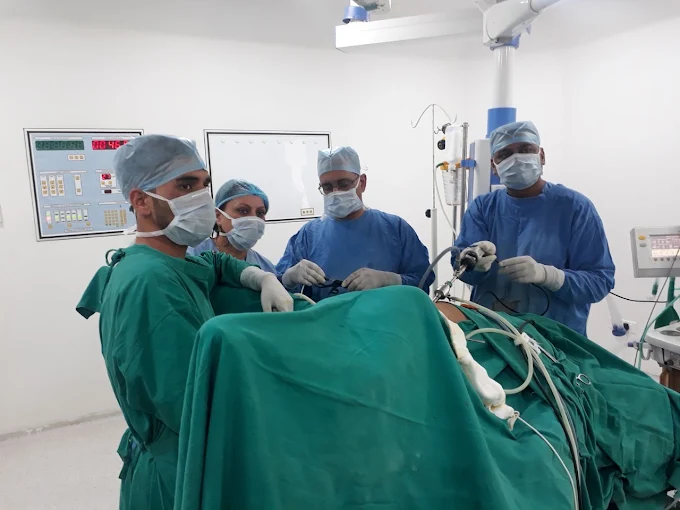
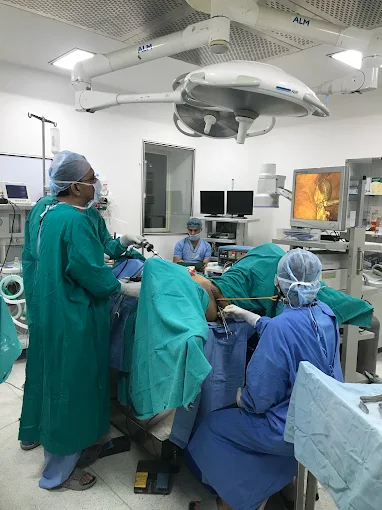
Today, laparoscopic hernia repair is the most common method used. It is a minimally invasive surgery done through small cuts. Recovery is faster, pain is less, and the scar is very small. Most women are able to return to their normal routine within two to three weeks.
When surgery is planned in advance as a routine procedure, the results are excellent. When it is done as an emergency, recovery takes longer, and risks are higher. This is yet another reason to seek medical advice early.
If you have been experiencing unexplained groin, pelvic, or lower abdominal pain. Additionally, if previous tests have not given a clear answer, then ask your doctor specifically about a hernia. Request an ultrasound or MRI scan if a physical examination is not giving results.
Do not dismiss your pain. Hernia in women is real. It is more common than most people think. And it is completely treatable, especially when caught early. You deserve a proper diagnosis and proper care.
At Dr Ahuja Clinic, we have experience in diagnosing and treating hernia in women. We understand that female hernia often looks different and is easy to miss. If something does not feel right, come in and let us take a look. The sooner you know, the better your outcome will be.
Book a consultation with our specialist team at Dr. Ahuja Clinic. Early diagnosis makes all the difference.
Contact Details
Address: #109 Sector 18 A, Chandigarh PIN 160018 (near Rotary Club)
Email: alokahujaruchirai@gmail.com
Mobile Number: +91-6284862829






Copyright © 2026 Dr Ahuja Clinic. All Rights Reserved | Marketing by : WebHopers
Website Design by CSW Technologies

 +91 6284862829
  Skin Geniee